What is Threads, and should a small brand be on it?
Lately everyone seems to say “just ask on Threads”. If you sell something or run a brand and you’re wondering whether to open yet another channel, this post helps you decide in ten minutes.
Contents
What Threads is, in plain words
Threads is Meta’s social network, from the same family as Facebook and Instagram. You usually sign in with your Instagram account, so you don’t have to build a profile from scratch.
The big difference: Threads is about words and conversation. Each post can be up to 500 characters, with photos or video if you like, but what brings a post to life is the replies underneath. People go to Threads to ask, to share stories, and to argue (gently) about which café is best, which lipstick lasts, which book is worth reading.
How it differs from Facebook and Instagram
Three differences matter if you run a brand:
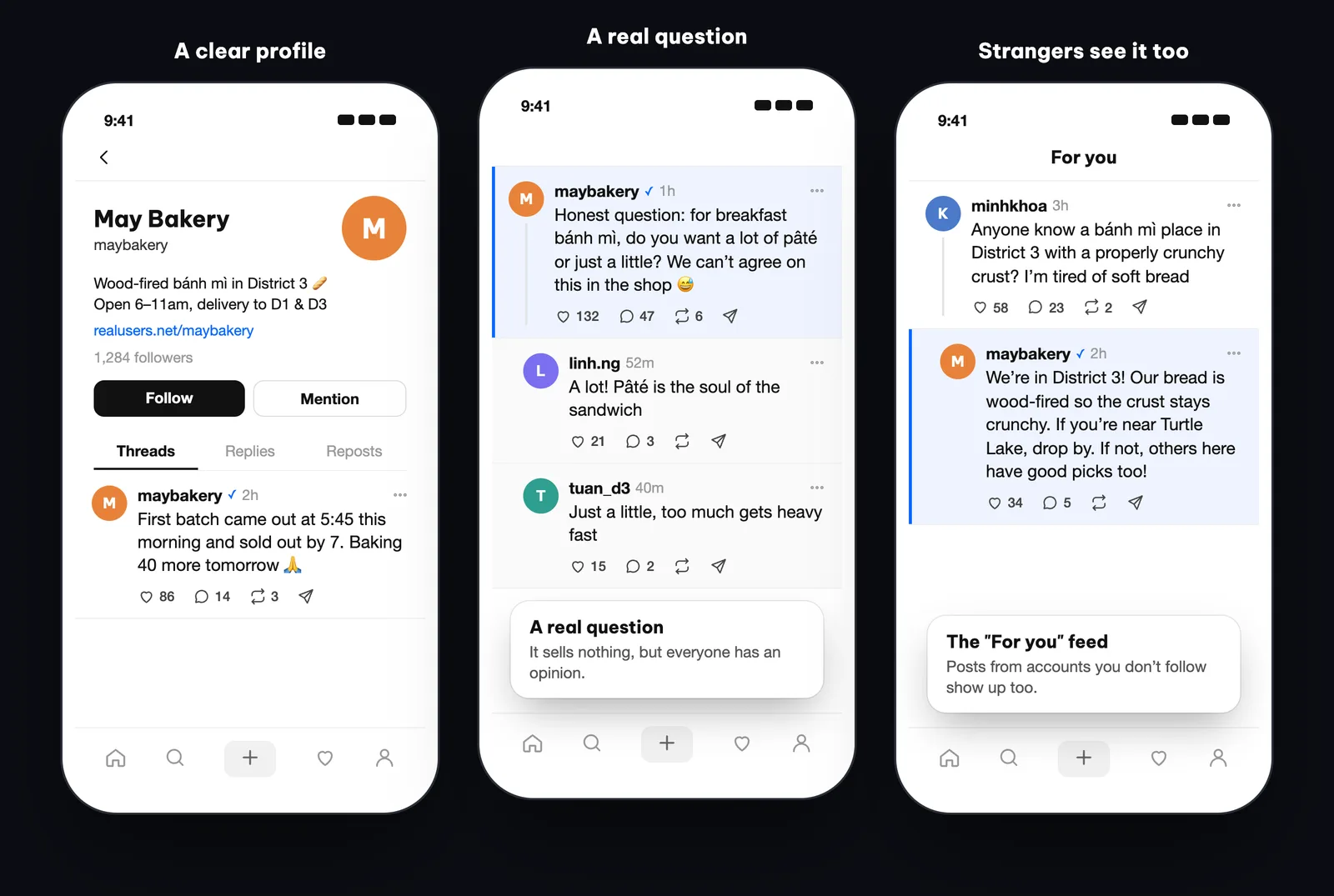
- Strangers see your posts. The “For you” feed shows posts from accounts people don’t follow yet. A new account with few followers can still get a lot of readers if a post makes people want to reply.
- A conversational voice beats an ad voice. Posts that read like a press release get scrolled past. Posts that sound like a real person telling a story or asking a question get read.
- Replies matter as much as posts. On Facebook, comments are an afterthought. On Threads, a reply is often where people first discover your brand.
Which businesses suit Threads
Threads works best for things people ask each other about before they buy:
- Food and drink: restaurants, bakeries, cafés, delivery.
- Beauty: cosmetics, skincare, spas, salons.
- Books, courses, study supplies.
- Local fashion brands and accessories.
- Services that need trust: clinics, home repair, travel, software for small businesses.
What they have in common: customers like hearing about real experiences from other people. If your product gets questions like “has anyone tried this?”, you should be on Threads.
When it’s not worth it yet
To save you some effort:
- You only want to post product photos with prices and wait for orders. Facebook and marketplaces still do that better.
- Nobody will read and answer replies. On Threads, an unanswered reply section wastes the post.
- Your product sells on looks alone, like high-end furniture. Threads can still work, but Instagram usually works better.
If you try it, what to do in the first two weeks
- Make your profile clear. Your logo as the profile photo, a one-line bio saying what you sell and where, and a single link.
- One post a day. It doesn’t need to be long. A real question, a small moment from the shop, a tip for using your product.
- Answer every reply in the first few hours. That’s when the post is travelling furthest.
- Find posts asking about exactly what you sell and reply from your brand account. Help first, mention yourself second.
- Review at the end of each week: which posts got the most replies? Do a few more like those next week.
For example, a bánh mì shop in District 3 could open with: “Honest question: for breakfast bánh mì, do you want a lot of pâté or just a little? We can’t agree on this in the shop.” It sells nothing, but everyone who reads it has an opinion.
In short
Threads won’t replace Facebook or Instagram. It’s where a brand talks with customers, and where strangers discover you through those conversations. If people in your industry ask each other before they buy, give it two serious weeks and then decide.
 Facebook
 Threads