How to grow engagement on Threads for a small shop: 7 things to do now
Posting regularly but still getting a handful of likes? Usually it isn’t the product. It’s that the post hasn’t given readers a reason to stop. Here are seven things you can start this week.
Contents
1. Open with a line people want to answer
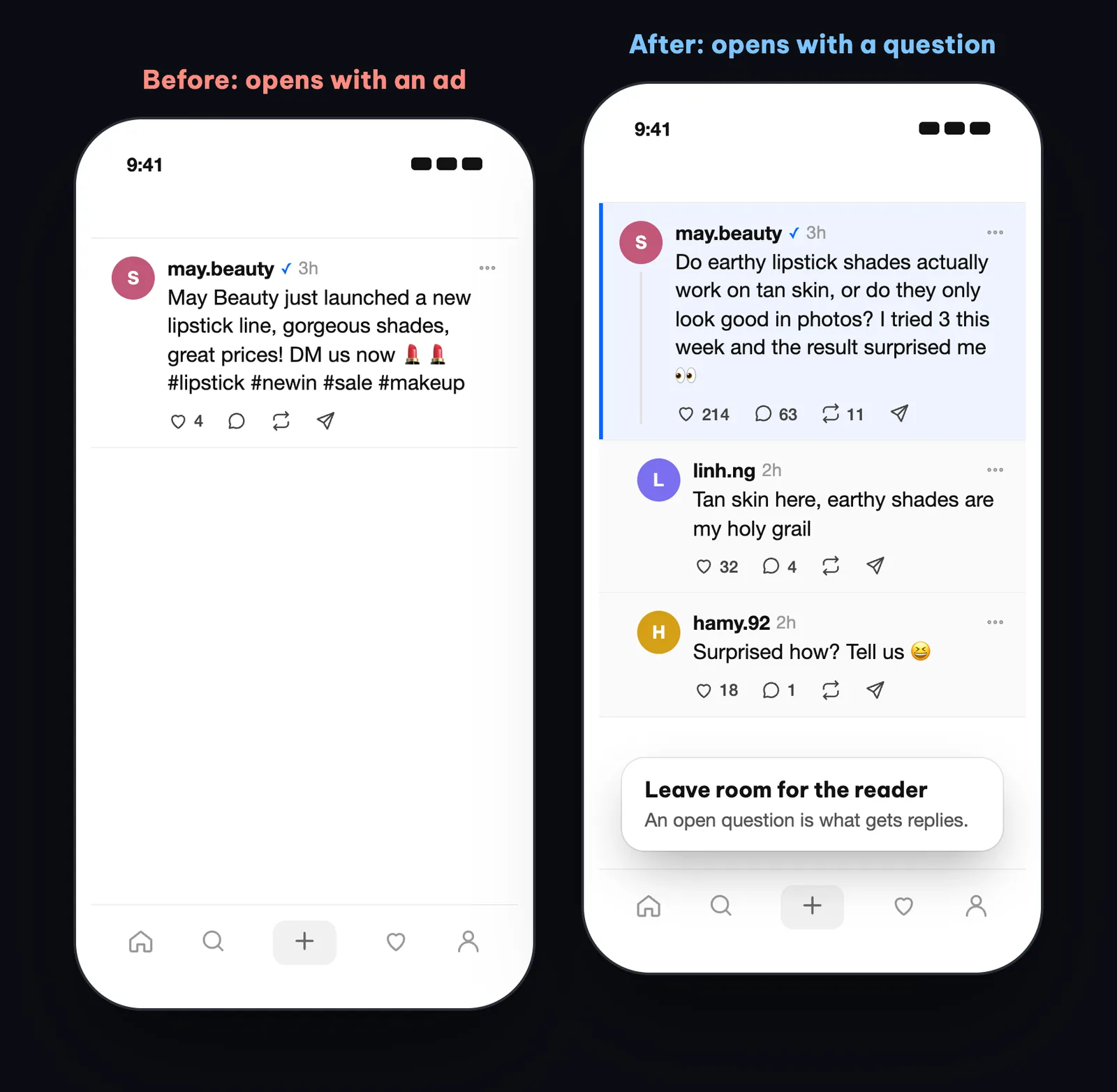
The first line decides whether people scroll past or stop. Don’t open with your shop name or a slogan. Open with a real question, or an opinion that makes the reader want to say “not for me”.
Instead of “May Beauty launches a new lipstick line, gorgeous shades, great prices!”, try: “Do earthy lipstick shades actually work on tan skin, or do they only look good in photos? I tried 3 this week and the result surprised me.”
2. Tell small stories with real details
Anyone can write “busy day at the shop today”. Only your shop can write “at 7am a motorbike taxi driver stopped by and bought 12 bánh mì for his whole crew”. Specific details make a post sound like a real person talking, and real people get replies.
3. Reply to comments in the first hour or two
Right after you post is when it reaches the most people. Every reply you write makes the conversation longer, and posts with conversations travel further. Set a routine: post, come back after 30 minutes and again after 2 hours to reply.
Make your replies real replies, not just “thanks!”. Ask the person something back, or add a detail, and the conversation gets one more round.
4. Add exactly one topic
Threads lets you add one topic to each post. Pick the topic people interested in your product follow, like “Skincare”, “Saigon coffee” or “Book reviews”. One precise topic beats several generic ones.
5. Post regularly, at the same times
You don’t need five posts a day. One a day, steadily for a few weeks, beats posting a burst and then going quiet. Pick the times your customers scroll their phones: office workers at lunch and in the evening, students later at night. Try two time slots for two weeks and keep the one that gets more replies.
6. Join the discussions people are already having
Every day on Threads someone asks about exactly what you sell: “Any bánh mì place in District 1 with a really crunchy crust?”, “What sunscreen works for oily skin?”. That’s the best chance for strangers to discover you.
How to do it right:
- Reply from your brand account and say who you are. People trust you more when you don’t hide it.
- Help first, mention yourself second. Answer the actual question, suggest other good options if they fit, then mention your product.
- Only join discussions that are genuinely relevant. Jumping into everything just annoys people.
7. Note which posts get replies
At the end of each week, look back at what you posted. Write down the three posts with the most replies and ask: how did it open, what was it about, what time did it go out? Next week, do a few more like those. After a month you’ll have your own “formula” for your shop, more reliable than any generic guide, this one included.
Things to avoid
- Reposting your Facebook post word for word, with a dozen hashtags.
- Putting a shop link in every post. Keep the link in your profile and mention it now and then.
- Writing only in ad-speak. Out of ten posts, eight should be conversation and two can be about your product.
 Facebook
 Threads